Table Of ContentAlexandre Alexeïeff and the Art of Illustration
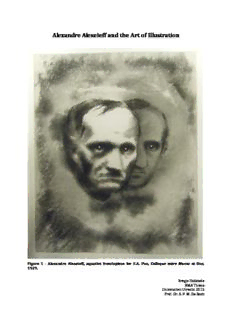
Figure 1 - Alexandre Alexeïeff, aquatint frontispiece for E.A. Poe, Colloque entre Monos et Una,
1929.
Bregje Hofstede
RMA Thesis
Universiteit Utrecht 2012
Prof. Dr. S. F. M. De Bodt
Preface
Warm thanks to the ArtExEast foundation in Geneva and the Centre National du Cinéma et de l’
Image Animée in Fontenay-le-Fleury for granting me such liberal access to their collections and
kindly providing help, tea and a desk. I would also like to thank Svetlana Alexeieff-Rockwell and
Nicole Rigal for their patience in answering questions and their kind advice. A word of thanks
also goes to Frau Heidrun Feistner of the Staatsbibliothek zu Berlin for introducing me to
Alexeieff, and to the Abteilung Historische Drucke for providing organisatorial support for the
first stages of the research presented in this thesis. Finally, I thank Prof. Dr. S. De Bodt for her
tutoring.
2
Table of Contents
Alexandre Alexeïeff and the Art of Illustration ...................................................................................................... 1
Preface .................................................................................................................................................................................... 2
Introduction ......................................................................................................................................................................... 4
Problem and state of research ...................................................................................................................................... 5
Research question.............................................................................................................................................................. 8
Relevance .............................................................................................................................................................................. 8
Materials ................................................................................................................................................................................ 9
Structure ................................................................................................................................................................................ 9
1. Alexeïeff in life and literature – introducing the artist ............................................................................... 11
1.1 Scholarship: state of research ............................................................................................................................ 13
1.2 Work, style, influence ............................................................................................................................................. 15
1.3 The ‘Myth’ of Alexeïeff ........................................................................................................................................... 18
1.4 Evaluations in contemporary criticism .......................................................................................................... 20
2. Alexeïeff’s practice and theory of illustration ................................................................................................ 25
2.1 Practice ....................................................................................................................................................................... 26
2.1.1 Voyage au Pays des Articoles .......................................................................................................................... 29
2.1.2 The Fall of the House of Usher ........................................................................................................................ 33
2.1.3 Le Chant du Prince Igor ..................................................................................................................................... 37
2.2 Theory .......................................................................................................................................................................... 42
2.2.1 Illustration: Definitions, types and aims .................................................................................................... 43
2.2.2 Thoughts about the relationship between image and text ................................................................. 50
2.2.3. Elements of Paragone in Alexeïeff’s discourse ....................................................................................... 58
3. Alexeïeff, illustrator and film-maker: separation and synthesis of the arts....................................... 65
3.1 Film vs. Illustration: Separation ........................................................................................................................ 68
3.2 Film as/and Illustration: Synthesis .................................................................................................................. 73
3.2.1 Theoretical constants ......................................................................................................................................... 75
3.2.2 Rhythm and composition .................................................................................................................................. 77
3.2.3 Movement and metamorphosis ..................................................................................................................... 84
Conclusion .......................................................................................................................................................................... 89
Literature ............................................................................................................................................................................ 98
Primary sources ............................................................................................................................................................ 103
Fondation ArtExEast, Geneva: ................................................................................................................................ 103
CNC-collections AFF / Fonds Alexeïeff-Rockwell, Paris / Fontenay-le-Fleury: ................................. 105
Appendix .......................................................................................................................................................................... 107
1. List of works illustrated by Alexeïeff............................................................................................................... 107
2. Illustrations chapter one ...................................................................................................................................... 109
3. Illustrations chapter two ...................................................................................................................................... 120
4. Illustrations chapter three ................................................................................................................................... 139
3
Introduction
Illustration has been a constant Western cultural practice since at least the 4th Century AD.
Although it is ancient and pervasive, book illustration is held in low esteem and has never been a
popular subject of research. Most notably, there exists no collection of theoretical writings on
this word-bound form of visual art.1 Yet the concept and approach of illustration have changed
greatly over time and have fostered an interesting discussion on the borders of art theory, which
provides a little-studied corpus of texts containing eloquent statements on the otherwise much
discussed relationship between text and image.
The Russian artist and émigré Alexandre Alexeïeff (1901-1982) is one of the illustrators
who were particularly concerned with the defence and theoretical explanation of their art. Fifty
years after he made his first illustrations, and looking back upon an illustrious career, he
remarked:
The illustration of books is considered a minor art, because of the frivolity with which it is
treated by easel painters. These all too often seem to think that their genius suffices to do
justice to a literary work of great value with a few thoughtless scrawls. Thus, one is
abashed by the sketches of Edouard Manet for “The Raven” by Edgar Allan Poe: one asks
oneself if the great painter even read the poem... or if he didn’t understand it just as poorly
as the art of illustration?2
These are the tart words of a self-conscious illustrator. Alexeïeff, we are to infer, did understand
the art of illustration. Not only did he illustrate some fifty titles, he also remarked upon the
absence of any kind of ‘theory’ of illustration, and sought to remedy it by writing about the
theory and practice of his art. In his ‘Conférence sur l’art d’illustrer les livres’ and other, largely
unpublished writings, he has provided a rare answer to the question what ‘illustration’ entails;
what its methods, concerns and functions are.3 Alexeïeff’s approach of illustration may help us to
understand a form of art that has long been - and still is - denigrated by many scholars and
critics.
As we shall see, Alexeïeff himself enjoyed considerable acclaim. Authors like Philippe
Soupault, Julien Green, and Albert Camus asked him to illustrate their work.4 Boris Pasternak
1 See for instance the extensive bibliography by Déom, Tilleuil, Vanbraband 2007. There are such collections for
graphic design, typography, and other related subjects, however, for instance Bierut 1994.
2 Alexeïeff, Quelques mots, exhib. cat. Annecy, 1975, AEE AL-Ms-212. All translations are my own, unless stated
otherwise.
3 Alexeïeff, Conférence, undated, AEE AL-Ms-105.
4 André Malraux probably also chose Alexeïeff, with whom he was befriended, as an illustrator. See Alexeïeff’s
correspondence with Gallimard, AEE AL-Ms-208. On Soupault: correspondence with Alexandre Alexeïeff, AEE
4
praised his illustrations for Dr. Zhivago, writing that Alexeïeff even made ‘engravings of the
breath, of the construction of sentences’.5 Gogol’s Journal d’un Fou (Schiffrin, 1927), with
engravings by Alexeïeff, was considered one of the three best livres d’art published in France
since the war, and in L’art du livre en France of 1931, the artist is described as ‘brilliant
visionary’.6 But if Alexeïeff was much praised, why were his illustrations so successful as
illustrations - and not merely as graphical art of a high technical skill and stylistic originality?
The concept of illustration - of its methods and functions - underlying such appraisals may
change greatly depending on time, place, illustrator and critic. Yet the historical art theoretical
discussion about illustration, in which professional illustrators like Alexeïeff actively
participated, has hardly been studied. The present thesis proposes to initiate the study of the
‘theories’ of illustration developed by its practitioners, by exploring Alexandre Alexeïeff’s
theories and practice of illustration. This artist’s significance for early 20th-century illustration,
his connections with the École de Paris, his love of theorizing both illustration and the other arts
he was involved with (most significantly theatre and animated cinema), and the wealth of
unstudied primary materials documenting this, make him an excellent starting-point for the
study of the changing art theories of illustration.
Problem and state of research
In this thesis, we shall consider ‘illustration’ all graphic art meant to physically accompany a
literary text, without including related forms like history painting, which in a broader sense also
‘illustrate’ a story.
As aforementioned, illustration in general has not enjoyed the scholarly attention which
its long and venerable career as a cultural practice, and its links to topical issues such as
intermediality and Word & Image studies, would seem to warrant. Earlier, largely fragmentary
attempts to theorize about illustration and to find a fitting method of research seem
unsatisfactory. First of all, many scholars and critics writing about illustration do not take into
account the specificity of this form, treating it simply as graphic art. For instance, Philippe
Soupault, praising Alexeïeff for his ceaseless experiments with engraving and for making
engraving into an art form in its own right, only considers the technique and style of the images,
forgetting their function: to illustrate a text.7 The art form in question is illustration, rather than
AL-Ms-016. On Green: letter to Alexandre Alexeïeff (05-10-1928), AEE AL-MS-001-015. On Camus: Alexeïeff,
letter to Roger Allard (25-02-1958), AEE AL-Ms-208.
5 Boris Pasternak, excerpt from a letter to his literary correspondent in Paris (05-11-1959), translated by
Alexeïeff, AEE AL-Ms-201.
6 Bruller 1931, pp. 41-66. Calot, Michon, Angoulvent 1931, p. 225.
7 Philippe Soupault, Text recorded by the French radio (25-02-1947), AEE AL-Ms-108. Even in texts where
Soupault does consider the images in their function of illustration, he keeps writing of ‘l’art de la gravure’. See
chapter 2.2.3 on paragone.
5
engraving, and is characterized sooner by function than by technique – one may illustrate in
watercolour, pen and ink, paint, etcetera, even if Alexeïeff preferred aquatint.8
Secondly, when an illustration is regarded in relation to a text, often it is only the formal
relation which is considered – thickness of line and type, size and placement of the illustrations –
and when the specific illustrative function of the image is taken into consideration, it is
frequently treated in a normative way. This may mean complete rejection of illustration, which
is regarded as superfluous and even harmful.9 In other cases, illustration is ‘accepted’ if it fulfils
specific criteria, and the task of the illustrations is carefully outlined – for instance, the image
should translate the text visually, as exactly as possible.10 We shall try to establish the criteria
Alexeïeff’s critics seem to use in their assessment of his work, and the tasks he himself assigned
to illustration.
Finally, a beloved strategy in the literature about illustration consists of not writing
about ‘illustration’ at all, creating instead artificial resorts of superiority such as the livre
d’artiste or the livre de dialogue which are to be separated strictly from ‘professional
illustration’.11 The latter is denied the status of art, and is branded commercial and utilitarian.12
To hold up the division, external criteria are used, for instance the status and habitual medium of
the artist, the cost of an edition and the number of copies printed. A famous sculptor providing
images for a small luxury edition of Ovid does not ‘illustrate’, he enters into a visual dialogue
with a text.13 In fact, these are still illustrations in any workable definition of the term. The only
reasons to refuse to call, for instance, Picasso’s drawings for Balzac ‘illustrations’ are those of a
rich man hesitant to enter a poorer relative’s house. Such snobbery is a token of the basic issue
underlying these problems of approach: the low esteem in which illustration has traditionally
been held. Illustration is denied the status of art, and when – in the hands of Picasso – that status
becomes unquestionable, the work immediately ceases to be considered illustration.
Even when illustration is not approached normatively and its specific character is kept in
mind – for instance, by taking the relation between image and text as a starting point - we still
8 An ‘art form’ or discipline of art can be defined not only by a certain medium (material or technique) which
characterizes it, but also by location or function. Illustration is singled out by its specific function – to
accompany a text - and its placement in a physical connection to that text, rather than by a set technique.
9 See for instance Congdon 1884, pp. 480-491.
10 For some attempts at classification of the varying tasks and functions assigned to illustration, see Nikolajeva,
Scott 2001, pp. 2-17. Nikolajeva offers a ‘typology of the picturebook’ and a number of categories in which
words and pictures interact, such as congruency, extension, counterpoint and deviation, with reference to
other ‘typologies’.
11 The term livre de dialogue was coined by Peyré 2001.
12Peyré, Drucker, Castleman, Mitchell, Stein, and Thurmann-Jajes are some of the scholars who seem to
subscribe to this view, separating illustration from the livre d’artiste or artist’s book on grounds of illustration’s
inferior quality. See Drucker 1995, pp. 60-69. Castleman 1994, p. 13. Mitchell 1976, p. 5. Stein 2001, p. 17.
Thurmann-Jajes 2001, pp. 10-21.
13 See for instance Castleman 1994, p. 49. It is also telling that Schmidt-Glintzer, writing of Picasso, feels the
necessity to enrobe the verb ‘illustrate’ in his title in quotation marks. Schmidt-Glintzer 2002.
6
encounter problems with the methods used. Semiotics, often used by critics studying the
relation of text and images, often appears as a modern version of Lessing’s categorical
separation of the means and (normative) goals of texts and images.14 Time and again we find the
list of fundamental differences between the two semiotic systems, and almost inevitably, having
sketched the abyss, the critic fails to bridge it – which is the essence of the work of an
illustrator.15 The semiotic approach often limits itself to a listing and analysis of the separate
ingredients of an illustrated book. This is like giving the chemical formulae of butter, eggs and
flour, without attempting to describe how the baker makes them into cake, let alone endless
varieties of cake, bread, and cookies.
Likewise, approaches from Word & Image studies have proven problematic. They have
concentrated on finding visual elements in text or textual elements in images (mental images,
ekphrasis, visual qualities of print, etc.), but seem to have difficulty with the concrete
combination of a text and illustration, and have in majority ignored the subject.
As to the theoretical aspects of illustration: theorizing the genre has largely been
undertaken from the perspective of other disciplines, such as psychology, semiotics or
literature.16 Surprisingly, the illustrator himself has been largely left out of these discussions.
And while there is a fair number of ‘histories of the illustrated book’, some of which devote a few
remarks to theory, there is no such thing as a critical anthology of the subject. The lack of a
theoretical basis has been noticed before, although only a handful of articles have appeared to
remedy it.17 A notable publication in this regard is Reinhard Heinritz’ Buchillustration als
Kunstform of 1999, which laments the lacuna but devotes less than 20 pages to the changing
functions of illustration from the middle ages up to Romanticism.18 It is expressly meant as an
introduction and appeal to further research, which has so far not appeared, despite the fact that
there has indeed been an interesting discussion and effort at theorizing on the part of the
illustrator.19
Previous approaches of the history of illustration have looked at the changing
professional and social circumstances of the illustrator or the changing critical perception of
illustration.20 Here too, the illustrator largely remains condemned to ‘speak’ only through his
14 Melot 1984.
15 For a good account of this discussion about the characteristics of text and images, see Mitchell 1986. See also
my previous paper on this subject, ‘Word and Image’.
16 For examples of a psychologizing approach, see Nodelman 1988. Nikolajeva, Scott 2001 make unsystematic
use of semiotics. Hodnett 1982 approaches illustration from the viewpoint of literature.
17 For instance Ege 1949, who considers illustration as a fine art with its own theories.
18 Heinritz 1999.
19 Of course, efforts have been made to map recent developments in illustration. Illustration Now! (Wiedemann
2007) for example presents a large number of illustrators, each giving a short statement about their work. But
such collections are far from amounting to or even providing a basis for a (historical) discussion of the
development of art theories of illustration.
20 Respectively, Kaenel 1996 and Schumacher 2000.
7
imagery. Yet if one sought to understand the theories of painting, one would hardly leave out the
writings of Alberti, Leonardo and their colleagues. This thesis, which developed out of an
interest in the ‘theories’ of illustration, therefore gives the floor to an illustrator.
Research question
We shall examine one illustrator’s ‘art theory’ of illustration, adopting the research question:
how did Alexandre Alexeïeff’s pursual of a second art form, animated film, influence his practice
and ‘theories’ of illustration? Answering this question will first of all necessitate an analysis of
the ways in which Alexeïeff theorized his work as an illustrator, before drawing conclusions
about the relationship between those theories and his activity as an animated film maker.
Relevance
The general interest of the current study may be found in the relative neglect with which
illustration has met; more in particular, it is exploratory in its focus on the illustrator’s
perspective. Alexandre Alexeïeff as the object of study provides us not only with a substantial
and original oeuvre, but also with the rarity of a considerable theoretical reflection on the art of
illustration. It is rare to have the methods and concept of illustration carefully chronicled, rarer
still to find them expressed by an illustrator, and I know of no scholarly study examining a
parallel case.
Alexeïeff recommends himself by the wealth of unstudied material (letters, notebooks,
essays) testifying to the artist’s awareness and analysis of the peculiars of his profession. The
artist moreover showcases with particular pathos the double bind of the illustrator caught
between artistic and commercial imperatives. The Romantic dogma of originality and autonomy
placed the illustrator, bound to both the text and the editor’s demands, in a difficult position.
Alexeïeff felt this paradox keenly, and sought to elevate illustration’s status to that of a fine art.
He can therefore also tell the more general story of an artist trying to defend and emancipate a
(novel) art form, all the more because the ways in which he engaged himself strongly resemble
those used to ennoble other arts, and can even be seen to follow the model of the renaissance
paragone (competitive comparison between the arts). Thus, Alexeïeff insisted on the specificity
of his art - illustration, but also animated cinema -, theorized about the best strategies and the
proper use of available techniques, and sought to sketch a theoretical foundation.
Alexeïeff’s oeuvre, despite his impressive productivity, his individual style, his technical
innovations and experiments with the techniques of engraving, the prestige of the editions to
which he contributed, and the acclaim these brought him in his time, has not yet received proper
scholarly attention. What literature exists often has a mythical flavour and has never been
critically reviewed. By contrast, Alexeïeff’s work in animated cinema has engendered quite some
8
commentary, and he is present in overviews of early animation pioneers.21 Not only have his
illustrations been neglected by comparison, the ‘film literature’ about Alexeïeff tends to
disparage it as merely a pecuniary side-production and puts it in stark contrast to his ‘real’
calling, film, a view which calls for correction. The question of the relation between the different
arts Alexeïeff practiced moreover provides an interesting background to, and insight into, his
approach of illustration.
Finally, by approaching illustration mainly through the discourse of a particular
illustrator, this thesis pilots a new approach to the study of illustration, while also pointing out
its complications. Alexeïeff’s writings, while developing some themes with consistency, show
many incongruities and variances, and can certainly not be regarded as a rounded theory. What
we conveniently call his ‘theory’ of illustration is in fact a construct of disparate writings and
remarks. What is more, the artist’s careful self-representation amounts to the construction and
manipulation of a persona so changeful it is nigh impossible to pin down.
Materials
The relevant secondary literature about Alexeïeff is quite sparse and will be critically reviewed
in chapter one; the most important critical evaluations of his work will be mentioned briefly.
The most important materials, which are at the basis of chapters two and three, are the
primary sources, especially the notes and essays by the artist and his correspondence with
friends or editors, the lion’s share of which has remained unpublished and was taken form the
archives of the foundation ArtExEast (AEE) in Geneva, whose collection focuses on Alexeïeff’s
graphic work, and from the Centre National du Cinéma et de l’Image Animée (CNC) in Paris,
regarding the animation work but also the illustrations. Other primary sources include an
interview with the daughter of the artist. Again, no attempt will be made to give a complete
overview of these materials; they will merely be discussed where relevant to research question.
While the main focus is on Alexeïeff’s ‘theory’, as can be drawn from written sources,
part of the actual illustrations which form its basis will be considered in order to illuminate the
theoretical conception of the artist. The illustrated oeuvre is too vast to attempt any overview of
it here. Illustrated books and some preparatory sketches have been found in the archives
ArtExEast, the Staatsbibliothek zu Berlin, Stedelijk Museum Amsterdam and the Konkinklijke
Bibliotheek. In view of the bulk of material, a small selection has been made as specified and
justified in chapter two.
Structure
The first part of this thesis will give a short description of Alexeïeff’s life and oeuvre in order to
introduce the artist. We shall not try to provide full biographical details, and questions of style,
21 For instance Russett, Starr 1976.
9
influence and artistic school which are outside the line of our argument shall merely be touched
upon. The chapter will proceed to review the most important secondary literature about
Alexeïeff’s illustrations – both contemporary criticism and more recent scholarship - and will
attempt to investigate what appraisals, analyses or explanations have so far been given of its
peculiar character and success. Particular attention will be paid to the ‘myth’ created jointly by
Alexeïeff and his critics, and which has strongly determined the way the work has been viewed.
The second and central chapter will concern Alexeïeff’s ‘theory’ of illustration.
By an analysis of several of his illustrated books, examined in tandem with his writings on this
subject, it will attempt to describe what the artist does in his illustrations that is particular for
(his conception of) this form of art, and how far his own writings, especially the two early essays
about illustration, but also his private notes and correspondence, signal and confirm this.
Secondly, special attention will be paid to the relationship between text and illustration within
Alexeïeff’s practice and theory. And thirdly, we will consider in what ways the illustrator strove
to ennoble his profession, and in how far the concept of paragone is applicable.
The third chapter will, in a first part, examine the position(s) illustration held vis-à-vis
animated film within Alexeïeff’s oeuvre. It will show how he proceeded with a similar
emancipatory goal regarding his other activity, that of making animated and publicity films.
After a short description of the main facts concerning this work, we will first analyze the
separate and isolating discourse in which his animation was discussed, by both Alexeïeff and
critics and scholars. The ‘pin board’, Alexeïeff’s main instrument for making films, was given its
own paragone and theoretical garb, which will be regarded with special attention to the position
of illustration within this discourse. The second part of the chapter will deal not with the
separation but with the synthesis between film and illustration in Alexeïeff’s oeuvre. It will
highlight thematical, technical and theoretical parallels, and particularly argue that the film work
parttakes of certain experiments made in the illustrated books, the results of which then fed
back into Alexeïeff’s conception and practice of illustration. Concepts central to both the film
work and the animation will thus be examined.
In conclusion, we will summarize these findings, sketching their broader context and
touching upon current developments in illustration, which will suggest ideas for further
research.
10
Description:Warm thanks to the ArtExEast foundation in Geneva and the Centre National du Cinéma et de l'. Image Animée in Fontenay-le-Fleury for granting me such liberal access to their collections and kindly providing help, tea and a desk. I would also like to thank Svetlana Alexeieff-Rockwell and. Nicole R